The Great Orion Nebula
Look at the constellation Orion on a clear night and find the three belt stars. Below them, in what appears to be the sword, there’s a faint fuzzy patch. That patch is the Orion Nebula — 1,344 light-years away, 24 light-years across, and one of the most active stellar nurseries in our region of the galaxy. Stars are being born inside it right now. The four bright stars at its core — the Trapezium — are less than a million years old, and their fierce ultraviolet radiation is ionizing the surrounding gas, creating the rose-colored glow visible even to the naked eye.
About M42
Also known as: NGC 1976, Sh2-281, LBN 974
Image details
Sky Position
Processing
Multi-session capture from September–November 2025. Hα data gathered first to map the emission structure, then broadband LRGB added for natural star colors.
PixInsight: WBPP → DrizzleIntegration (2x on the Hα data for extra detail) → DBE → SPCC. Starless version created with StarXTerminator for separate nebula processing. Hα blended into Luminance at 60% weight. Recombined stars after NoiseXTerminator and BlurXTerminator.
Final curve adjustments in Photoshop for the Trapezium core HDR blend.
Continue Exploring
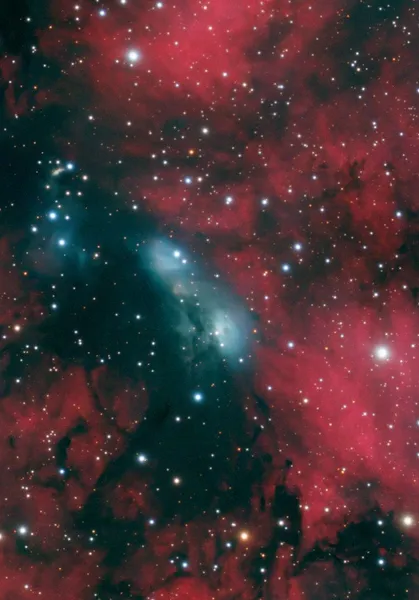 6,000 ly distance
Blue reflection nebulae and red hydrogen in the heart of Cygnus
6,000 ly distance
Blue reflection nebulae and red hydrogen in the heart of Cygnus
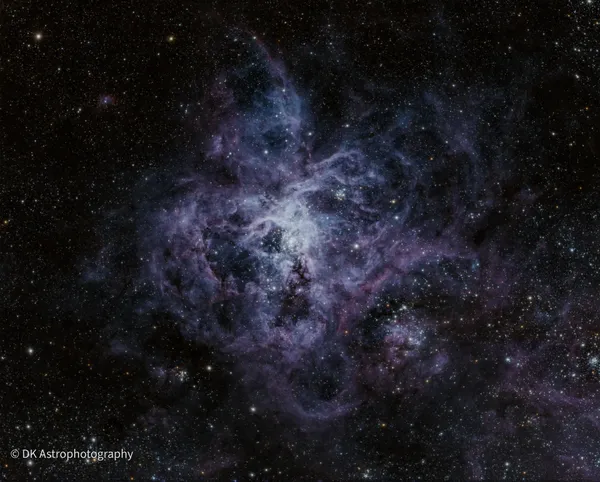 161,000 ly distance
The most luminous nebula in the Local Group of galaxies
161,000 ly distance
The most luminous nebula in the Local Group of galaxies
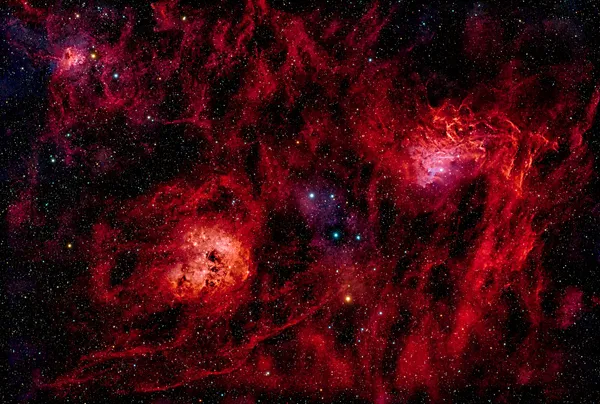 1,500 ly distance
A runaway star lighting up the gas cloud it's racing through
1,500 ly distance
A runaway star lighting up the gas cloud it's racing through
Comments